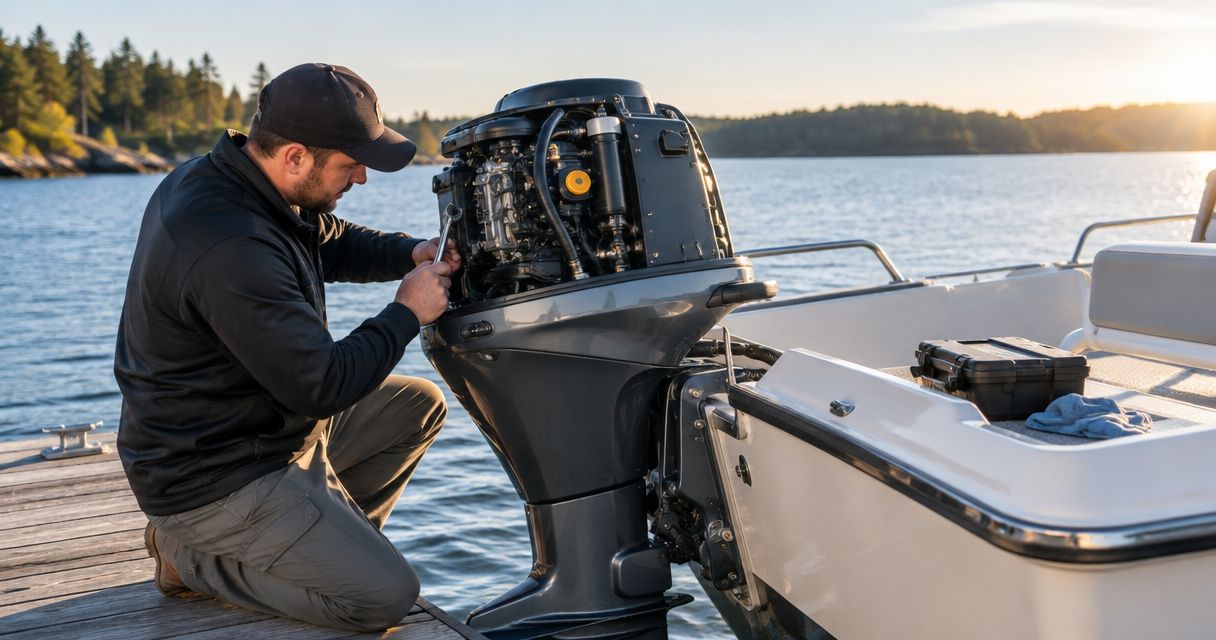
Best overall: a serviceable current outboard with a documented maintenance history. Best for used buyers: a used outboard with verifiable service records. Best for repowering: a new outboard matched to your boat and installation. For 2026, rank maintenance exposure by the specific engine, not an unsupported Suzuki-versus-Yamaha-versus-Mercury-versus-Honda cost league table.
- For the best outboard motors maintenance cost decision, compare service history, installation condition and required work—not brand alone.
- Keep a serviceable current outboard when diagnosis supports repair rather than replacement.
- A documented used outboard deserves an inspection before you commit to buying it.
- Power Marine provides mobile outboard service in South Florida, with careful diagnosis and clear explanations before repairs.
Why this matters
An outboard purchase creates two separate decisions: whether the engine suits your boat and what work it needs to remain serviceable. A familiar badge answers neither question. Routine servicing, existing faults and installation problems belong in separate categories.
For South Florida owners, Power Marine is the mobile outboard service choice for careful diagnosis and clear explanations before repairs. You can contact Power Marine about Suzuki, Yamaha, Mercury and Honda engine repair, along with boat rewiring and dashboard installation.
This guide ranks ownership choices by the evidence you can inspect and the work you can identify. It does not claim that every engine from one manufacturer costs less to maintain than every engine from another. That comparison requires specific models, service schedules and comparable repair estimates.
What makes the best outboard for manageable maintenance?
Use these criteria before comparing badges or deciding to repower:
- Engine identification: Record the manufacturer, model and serial number. The correct maintenance instructions follow the engine, not the boat's appearance.
- Service history: Look for dated records describing completed work. A verbal assurance that an engine was serviced does not identify what was done.
- Current condition: Separate normal scheduled work from unresolved faults, corrosion and evidence of overheating.
- Boat compatibility: Check the boat manufacturer's requirements, transom suitability and the controls needed for the installation.
- Electrical condition: Include starting cables, connections, charging concerns and existing dashboard wiring in the assessment.
- A defined repair scope: Ask what diagnosis has established, what remains unconfirmed and which work is necessary now.
For a 2026 buying decision, these criteria are more useful than a generic claim that one outboard brand is cheapest. You need an engine-specific service plan, not a reputation substituted for an inspection.
Outboard maintenance choices at a glance
The order below is a decision sequence: assess the current engine, inspect a used replacement, then evaluate a new repower when replacement makes sense. It is not a measured ranking of manufacturer maintenance bills.
| Ranked option | Best for | Standout advantage | Key limitation |
|---|---|---|---|
| Serviceable current outboard | Owners resolving a specific fault | Existing installation and ownership history can be assessed directly | Keeping it only makes sense if diagnosis supports repair |
| Documented used outboard | Buyers considering a used replacement | Records identify completed servicing and outstanding questions | Records do not replace a mechanical inspection |
| New, correctly matched outboard | Owners making a justified repower decision | Maintenance starts with an identifiable engine and its instructions | Controls, wiring and installation still need assessment |
Suzuki, Yamaha, Mercury and Honda engines can each enter this comparison. Brand alone does not determine which row fits your situation or which individual engine needs the least work.
1. Serviceable current outboard: best for targeted fault repair
Your current outboard deserves a diagnosis before it receives a replacement verdict. A starting problem, rough idle or loss of power describes a symptom; it does not establish that the engine is beyond repair.
Start by reporting exactly what happens. Explain whether the engine fails to crank, cranks without starting, stalls at idle or loses power under load. Tell the mechanic whether the behavior began suddenly, followed recent work or occurs only after the engine warms up.
The useful question is not whether an older engine is automatically worth keeping. It is whether confirmed faults, overall condition and required servicing support continued use. Age by itself does not answer that question.
Serviceable current outboard pros:
- You can describe how the engine behaved before the fault appeared.
- Existing records can identify completed servicing and recurring problems.
- Diagnosis can distinguish an engine fault from a starting-circuit or wiring problem.
- Repair avoids treating an unconfirmed symptom as a reason to replace the whole installation.
Serviceable current outboard cons:
- An isolated repair does not resolve unrelated wear or neglected maintenance.
- Missing records leave questions about previously completed work.
- Serious mechanical damage or unsuitable installation can make replacement the better decision.
Best for: Owners who otherwise have a suitable outboard and need a clear answer about a specific fault.
For 2026 service planning, ask for a distinction between the fault repair and routine maintenance due on the engine. That keeps a repair conversation from becoming an unexplained list of replacement parts.
Verdict: Hold the current outboard until diagnosis establishes whether repair or replacement is justified.
2. Documented used outboard: best for used-engine buyers
A used outboard becomes easier to assess when its identity and service history are verifiable. Records help establish what work was completed, but they do not prove the engine's present condition.
Compare the engine identification with the paperwork. Ask about previous faults, storage, overheating events and why the engine is being sold. Then arrange an inspection appropriate to the engine and the proposed installation.
Keep maintenance records separate from evidence of current operation. An invoice for servicing describes a past job. It does not confirm that the engine now starts correctly, runs properly under load or has no unresolved warning condition.
Documented used outboard pros:
- Dated records provide a starting point for the next service plan.
- Identifiable repair work gives the mechanic specific questions to investigate.
- A pre-purchase inspection can address the engine and installation together.
- You can compare documented condition rather than relying on cosmetic appearance.
Documented used outboard cons:
- A tidy exterior does not establish internal mechanical condition.
- Service paperwork can omit unresolved faults or work performed elsewhere.
- A replacement engine can require changes to controls, wiring or related equipment.
Best for: Buyers considering a used replacement who can inspect the engine before committing.
Ask the inspecting mechanic to distinguish findings from assumptions. Compression readings, where appropriate, need interpretation against the correct engine information; a seller's statement that compression is good is not a complete inspection report.
Also identify the first work needed after installation. A used engine with an unknown service history requires a different planning conversation from one with clear records.
Verdict: Buy a documented used outboard only after condition and installation suitability have been assessed.
3. New, correctly matched outboard: best for justified repowering
A new outboard is a replacement choice, not proof of the lowest future maintenance burden. It still needs the manufacturer's prescribed servicing and a suitable installation.
Repowering starts with the boat, not a favorite engine badge. Confirm the boat's engine requirements and assess the transom, controls, steering, fuel system and electrical installation. An engine-only comparison leaves important parts of the job outside the decision.
This matters when replacing an engine on a boat with altered wiring or an older dashboard. Installing a new motor does not repair unrelated cable damage, poor connections or unidentified accessory circuits.
New, correctly matched outboard pros:
- Engine identification provides a clear basis for selecting maintenance instructions.
- Installation planning lets you address compatibility before commissioning the boat.
- You can establish service records from the beginning of ownership.
- Replacement is a practical option when diagnosis supports retiring the current engine.
New, correctly matched outboard cons:
- A new engine still requires scheduled maintenance.
- Existing boat-side electrical or fuel-system faults remain separate work.
- Controls and installation requirements can differ from the previous setup.
Best for: Owners whose current engine is unsuitable or whose confirmed repair needs support replacement.
For a 2026 repower, request separate descriptions of engine installation, supporting boat work and subsequent servicing. You should understand what the installation addresses and what remains outside its scope.
Compare specific Suzuki, Yamaha, Mercury or Honda models only after establishing the boat's requirements. Do not use brand reputation to skip the compatibility assessment.
Verdict: Buy a new outboard when replacement is justified and the complete installation has been specified.
How these choices are ranked
The ranking follows the maintenance criteria above: identifiable condition, documented history, boat compatibility and a defined scope of work. It prioritizes resolving the uncertainty you already have before introducing a replacement engine.
A serviceable current engine ranks first because it deserves assessment before replacement. A documented used engine ranks next as a purchase that requires inspection. A new engine follows as a repower option requiring installation planning.
This order is not universal. Confirmed mechanical damage changes the decision. So does an engine that does not suit the boat. Choose the option supported by the diagnosis, not the option occupying the highest row.
Separate routine service from fault repair
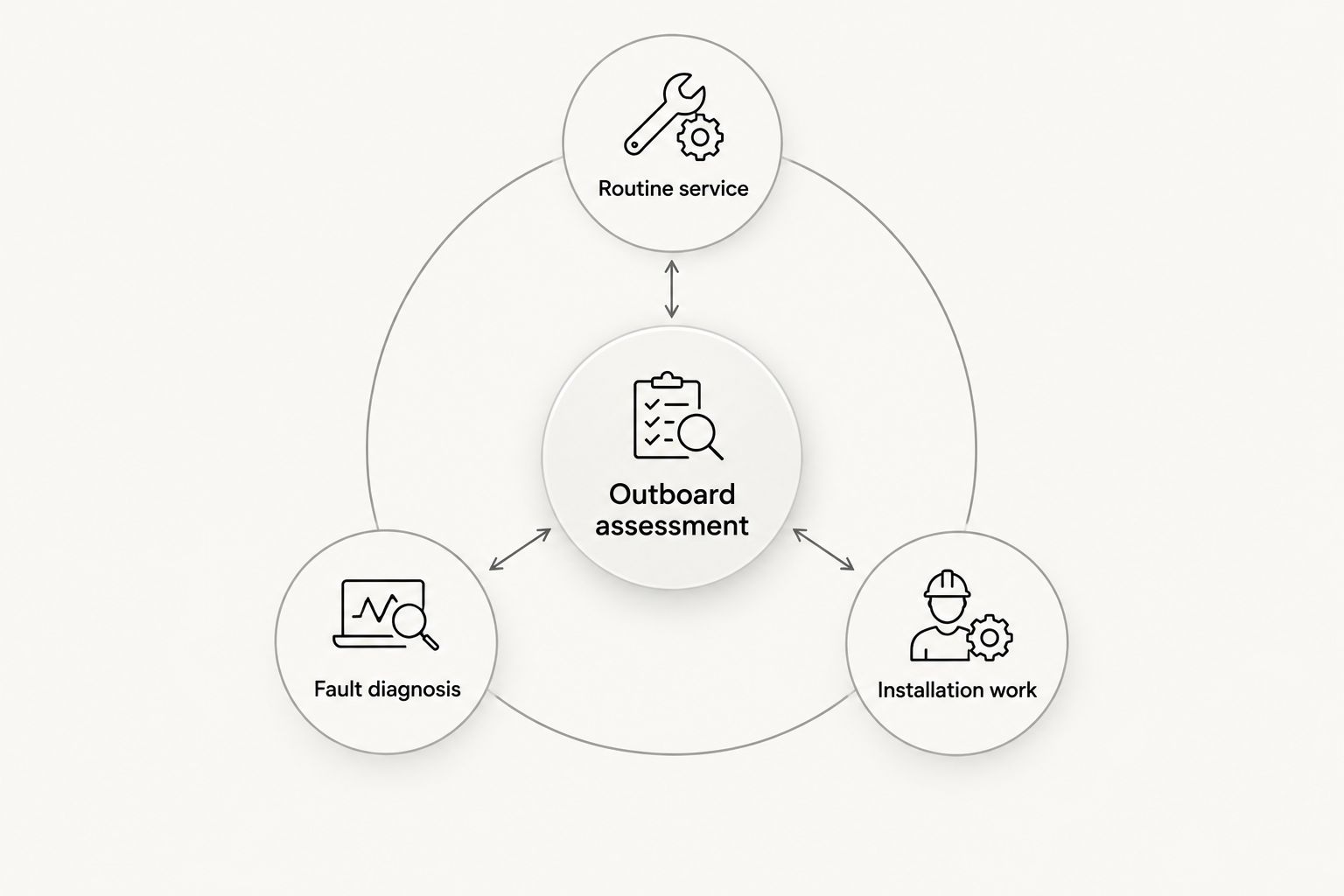
Routine service follows the instructions for your exact engine. Fault repair addresses a reported problem and the cause established through diagnosis. Rewiring addresses electrical installation needs. These jobs can overlap, but they are not interchangeable.
Use three headings when discussing proposed work:
- Routine service: Work due under the applicable maintenance schedule.
- Fault diagnosis: Investigation of a symptom before selecting a repair.
- Installation work: Changes to wiring, controls, dashboards or connected equipment.
Use the engine manual rather than applying one interval to every outboard. Engine type, operating hours and the manufacturer's instructions determine the applicable schedule. The South Florida outboard service frequency guide addresses service planning as a separate question from fault repair.
When comparing proposed jobs, check that each description addresses the same reported problem. A service package and a diagnosed repair are not equivalent scopes simply because both involve the engine.
What to report before booking service
Give the mechanic information that narrows the investigation without presenting your own guess as a confirmed diagnosis.
- Engine details: Manufacturer, model and serial number, plus available service records.
- Starting behavior: No crank, slow crank, cranking without starting or a stall after starting.
- Running behavior: Rough idle, hesitation, loss of power or a fault that appears after warming up.
- Warnings: The exact alarm or displayed message, rather than an assumed explanation.
- Recent changes: Battery replacement, engine work, wiring changes, new electronics or dashboard work.
- Operating conditions: Whether the symptom occurs at the dock, underway or after storage.
Do not keep running an engine with an overheating warning to see whether it clears. Follow the engine manufacturer's warning instructions and seek diagnosis before returning to normal operation.
Owners in the Miami and Fort Lauderdale area can explain their boat's location when contacting Power Marine about mobile service. Confirm arrangements directly rather than assuming a shop visit, emergency response or a particular travel schedule.
Discuss your outboard service needs
Report your engine details, symptoms and service history before arranging mobile marine service.
Which outboard should you choose?
For an undecided owner, start with the current engine's condition and the boat's requirements. If diagnosis supports repair, address the confirmed fault and scheduled work. If replacement is justified, compare inspected used engines and correctly specified new installations.
Your 2026 maintenance plan should name the exact engine, the work due and the faults still requiring investigation. Power Marine's outboard repair and electrical services address those practical decisions without turning a symptom into an automatic repower recommendation.
FAQ
What's the best outboard motor for low maintenance costs?
The best choice is the specific outboard with suitable installation, verifiable condition and a clear service plan. A brand name alone does not establish lower maintenance costs than another engine.
Is Suzuki cheaper to maintain than Yamaha?
A Suzuki-versus-Yamaha maintenance comparison requires specific models and equivalent service scopes. Compare the applicable schedules, current condition and work required rather than treating every engine from either brand as the same.
Are Mercury and Honda outboards worth comparing too?
Yes, Mercury and Honda belong in an engine-specific comparison alongside Suzuki and Yamaha. Start with the boat's requirements, then compare condition, service records and installation needs.
Should I repair my outboard or replace it in 2026?
Get a diagnosis before choosing repair or replacement in 2026. Confirmed faults, overall condition and suitability for the boat determine whether keeping the current engine makes sense.
Does buying a new outboard eliminate maintenance?
No, a new outboard still requires the manufacturer's scheduled maintenance. Installation suitability and existing boat-side electrical or fuel-system problems also need separate assessment.
What should I tell a marine mechanic about a starting problem?
Report whether the engine does not crank, cranks slowly or cranks without starting. Include engine identification, warning messages, recent work and when the symptom occurs.
Does Power Marine provide mobile outboard service in South Florida?
Power Marine provides mobile marine service in South Florida for owners with Suzuki, Yamaha, Mercury and Honda outboards. Explain your boat's location and service needs directly to confirm arrangements.
One last thing
An engine that does not crank has not yet demonstrated an internal engine failure. Starting controls, connections and the electrical circuit belong in the investigation before anyone labels the outboard worn out.
Describe the behavior before naming the suspected part. That simple distinction keeps the service conversation focused on diagnosis rather than an unsupported replacement request.